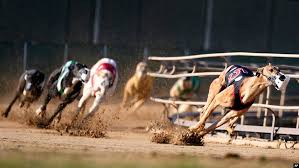

You can improve your chances in online dog-racing JP betting by focusing on proven strategies, disciplined bankroll control, and using the newest JP Terbaru 2026 features to spot value bets. Target races with transparent form data, prioritize consistent greyhounds over longshots, and size your bets to protect your bankroll while exploiting the best odds and promotions.
This article shows practical tactics for winning more often: how to read form guides, apply simple analytics, use JP Terbaru 2026 tools to your advantage, and capture boosted odds and bonuses without chasing losses. Follow these steps and you’ll move from guessing to making calculated, repeatable choices that improve long-term results.
Essential Strategies For Winning Online Dog Racing Bets
You need focused data analysis, accurate assessment of each dog’s current condition, and clear understanding of how track surface and layout change race outcomes. Apply these points directly to your bet selection and stake sizing.
Analyzing Recent Race Data
Look at the dog’s last 6 starts and record finishing positions, trap numbers, and sectional times when available. Compare times over the same distance and at the same track to spot genuine improvement or decline.
Use a simple table to track key metrics:
- Date | Track | Distance | Trap | Finish | Time | Notes
Prioritize consistent performers and note one-off fast times that coincide with favorable traps or weak fields. Watch for patterns such as slow early splits but strong finishes—those dogs may need an outside trap or a longer race. Adjust your expected finishing order based on head-to-head results and repeat rivalries rather than headline odds alone.
Evaluating Dog Form And Condition
Assess the dog’s body condition, coat quality, and recovery between races from photos, reports, or trainer updates. A dog that raced hard three times in two weeks often underperforms; look for at least one fresh run or clear training update before betting heavy.
Consider age and career starts: young dogs improve quickly while aging sprinters may fade. Note recent equipment changes (muzzles, bandages) and trainer switches; these often affect early break and stamina. Bet more on dogs showing progressive, race-to-race improvement and avoid those with unexplained layoff-plus-quick-return patterns.
Understanding Track Conditions
Identify whether the track favors early speed or late runners by reviewing split times and recent race replays. Tight bends typically reward inside traps and early breakers; wide, sweeping circuits give late chargers more opportunity.
Monitor surface changes: wet or heavy going slows overall times and magnifies the advantage of dogs that handle grip well. Check trap bias reports and recent meeting results to see if a particular trap has produced unusually high wins. Use this to adjust both selection and stake—reduce exposure when track conditions amplify variance.
Leveraging JP Terbaru 2026 Features
JP Terbaru 2026 adds targeted data feeds, faster odds updates, and new in-platform betting tools that change how you scout races and place stakes. Focus on the exact updates, the tools you can use immediately, and which strategy adjustments will protect your bankroll and exploit new opportunities.
Identifying Key Updates In JP Terbaru 2026
JP Terbaru 2026 introduces real-time sectional timing for each greyhound, enhanced form filters, and split-second odds refresh rates tied to live telemetry. You should prioritize sectional timing to spot dogs that finish strongly versus those that start fast but fade.
Updated form filters let you combine surface condition, recent racing cadence, and trainer strike-rate into a single view. Use those composite filters to reduce noise from irrelevant races and focus on dogs with consistent metrics across those fields.
The faster odds refresh reduces lag between race events and market prices. That change rewards swift decision-making and punishes delayed responses. Plan to monitor at least two races in parallel and set alerts for sudden line moves.
Utilizing New Betting Tools
The platform adds an in-built expected value (EV) calculator, customizable alert rules, and a ladder bet-entry interface. Use the EV calculator to compare your estimated probability with the market-implied probability before committing funds.
Set alert rules for specific triggers: odds thresholds, sectional-split anomalies, or trainer changes within 48 hours. These alerts ensure you act when market inefficiencies appear rather than chasing after outcomes.
The ladder interface speeds partial-stake ladders and scalps, letting you ladder into a position across multiple odds. Employ it for liquidity-limited races where placing the full stake at a single price isn’t practical. Always confirm matched volume before sizing trades.
Adapting Your Strategies To Platform Changes
With telemetry and faster odds, your existing slow-play ante-post or manual-multi approaches may underperform. Shift toward shorter decision windows and pre-defined entry rules that you can execute in seconds.
Increase emphasis on live matching and in-play hedges; the platform’s refresh rates favor traders who can hedge post-jump. Prepare staking plans that include exact trigger points and partial-exit percentages to limit emotional overrides during live swings.
Finally, revise bankroll allocation by reducing single-race exposure and using smaller, higher-confidence stakes when alerts align with EV signals. That preserves capital while you exploit the finer-grained data JP Terbaru 2026 provides.
Effective Bankroll Management Techniques
You will allocate funds, choose stake sizes that match your risk tolerance, and record every bet to protect your bankroll and make data-driven adjustments. Focus on clear limits, consistent stake rules, and accurate tracking to avoid impulse decisions.
Setting Budget Limits
Decide a monthly or event-specific bankroll that you can afford to lose without impacting bills or essentials. Use a fixed percentage of your disposable income — commonly 1–5% per month — and separate that money into a dedicated account or e-wallet for betting.
Set absolute loss limits for a session and for a week. For example: stop after a 10% session loss or a 25% weekly loss of the bankroll. Automate protections where possible (account limits, self-exclusion windows) to prevent chasing losses when emotions run high.
Review and adjust limits only after at least 30 active betting days or a full racing season. Increase your budget only when you show consistent, documented profit and mental readiness to handle a larger stake.
Choosing Stake Sizes Wisely
Determine a unit size as a fixed percentage of your bankroll — typically 1–3% per standard bet for conservative play, 4–6% for moderate risk. Express every wager in units, not currency, to keep stakes proportional as your bankroll changes.
Use variable staking for edges: flat units for value bets, 2–3 units for higher-confidence selections, and 0.5 units for speculative longshots. Avoid proportional betting that multiplies stake after losses; such methods accelerate drawdowns and increase ruin risk.
Consider the Kelly Criterion only if you can reliably estimate true win probability. Use a fractional Kelly (e.g., 1/4 Kelly) to limit volatility. Keep a written staking rule set and follow it without deviation during a streak.
Tracking Winnings And Losses
Record every bet with date, race, dog name, stake (units), odds, bet type, and outcome. Use a simple spreadsheet or a dedicated app; categorize bets by strategy (value, hedged, exotics) to analyze what works best for you.
Calculate metrics weekly: ROI, strike rate, average odds, and max drawdown. Review after 50–100 bets to identify bias, overexposure to certain tracks, or strategy underperformance. Adjust unit size or tactics only after statistical evidence supports change.
Keep a short journal entry for emotional context on losing streaks or impulsive bets. Emotional logs help you spot behavioral leaks that numbers alone won’t show.
Advanced Analytical Approaches
You will apply quantitative methods and head-to-head profit comparisons to make bets with a measurable edge. Prioritize data quality, model validation, and the specific economics of each bet type when allocating stakes.
Using Statistical Models For Performance Prediction
Build models that combine recent race times, sectional splits, trap bias, and greyhound form cycles. Use logistic regression or gradient-boosted trees to predict win/place probabilities; include interaction terms for track condition × trap and short-term form decay (last 3–5 races).
Validate models with a holdout set and track metrics like Brier score and calibration plots. Backtest across different tracks and distances to detect overfitting. Adjust for market factors by comparing model-implied probabilities to starting prices; treat consistent positive expected value (EV) signals as actionable.
Keep features practical: speed index, race class, break speed, box draw, and trainer strike rate. Automate data cleaning and set thresholds for minimum sample size per variable to avoid noisy estimates.
Comparing Bet Types For Profitability
List the common bet types and typical profit dynamics:
- Win/place (single): Lower variance, easier to model probabilities; best for consistent EV on favorites.
- Exacta/Quinella: Higher payouts but sensitive to rank-order errors; use only when your model ranks top two with clear margin.
- Tricast/Trifecta: High variance, use sparingly and only with targeted combinations or boxed tickets when model confidence is very high.
- Exotics pools (pari-mutuel): Payouts depend on market pooling—monitor public money flows and late market moves.
Evaluate bets by expected return per dollar staked and Sharpe-like ratio (mean return / standard deviation). Size stakes with Kelly fraction tuned for your bankroll volatility tolerance. Prefer singles when your edge is modest and exotics only when the model shows concentrated probability mass across a few combinations.
Maximizing Bonuses And Promotions
Focus on offers that lower your cost per bet and give clear paths to withdrawable funds. Prioritize bonuses with reasonable rollover, sport-specific applicability, and valid greyhound race market coverage.
Selecting The Best Bonus Offers
Look for bonuses that apply specifically to greyhound/JP markets or that allow singles and multiples on greyhound races. Prefer deposit matches with a maximum cap you can realistically meet and free bets that convert to cash after a single qualifying stake.
Compare rollover (wagering) requirements numerically — a 5x bonus at 10x rollover is substantially better than a 10x bonus with 30x rollover. Check minimum odds: odds of -200 (1.5) or longer are common, so avoid offers that require longshot odds you rarely use.
Use a short checklist:
- Bonus type: deposit match, free bet, cashback, or enhanced odds.
- Rollover: target ≤ 10× for practical value.
- Eligible markets: must include greyhound/JP races.
- Stake rules: whether stake is returned with winnings.
- Time limits: expiration in days.
Reading Terms And Conditions Carefully
Scan T&Cs for the exact betting markets and bet types that count toward rollover. Operators often exclude certain bet types (e.g., each-way, ante-post, or tote bets). If accumulators require a minimum selection count or minimum odds per leg, calculate whether your normal strategy meets those rules.
Watch for wagering contribution rates; some bet types may contribute only 10–50% toward rollover. Note maximum cashout or cap on winnings from free bets. Keep an eye on ID or geo verification deadlines that can void offers if not completed. Save or screenshot the offer page and T&Cs so you can reference the exact wording if a dispute arises.
Popular Dog Racing Events In 2026
You’ll find a mix of established international classics and fast-growing regional contests that shape betting markets and odds liquidity. Pay attention to event format, prize pools, and live-stream availability when planning wagers.
Highlighting Major Tournaments
The Melbourne Cup of greyhound racing (Australia) remains a top betting target because of deep fields and predictable grading systems. You can study form lines from the preceding heats and semifinals; bookmakers tighten markets as late scratches and trap draws finalize.
The English Greyhound Derby continues to attract elite sprinters from the UK and Ireland. Racing at Towcester and Nottingham circuits often influences tote pools and exchange betting volumes across Asian-JP markets.
Look for the Irish Greyhound Derby and the Irish St. Leger for stamina tests that shift value toward proven stayers. These events publish detailed racecards and sectional times, which you should use to refine speed-to-stamina models before placing larger stakes.
Spotlighting Rising Star Competitions
Regional circuits in Spain and Eastern Europe have launched high-frequency festivals that generate fresh betting opportunities. Those meets often list younger greyhounds with inconsistent form; you can exploit softer markets by tracking trainer strike rates across short series.
Cryptocurrency-powered online platforms host international sprint series that aggregate races from small tracks into daily betting pools. You should monitor liquidity and withdrawal rules on those platforms, since they influence in-play betting and hedging options.
Look also for scheduled “Rising Stars” invitationals that focus on two-year-old prospects; these races reveal future Derby contenders and offer asymmetric odds if you act before market makers adjust.
Risks And Responsible Gambling
You face clear financial and emotional risks when betting on online greyhound races. Identify behavioral changes, set firm limits on time and money, and use platform tools to avoid escalating losses.
Recognizing Signs Of Problem Gambling
Watch for changes in your daily routine tied to betting: skipping work, losing sleep to follow races, or neglecting family commitments. Financial red flags include borrowing to cover bets, repeatedly chasing losses, or rapidly increasing stake sizes beyond your pre-set bankroll. Emotional signs matter too—if you feel restless, defensive about betting, or lie about how much you wager, those are strong indicators.
Track concrete metrics weekly: number of bets, total stakes, net wins/losses, and hours spent on apps or streaming. If any metric trends upward while your disposable income or mood declines, act quickly. Contact a support line, enable self-exclusion on the site, or consult a financial counselor experienced with gambling harms.
Setting Time Limits On Betting
Decide in advance how many minutes or hours per day and per week you will spend on racing apps and stick to that limit. Use built-in session timers, push-notification blockers, or device screen-time controls to enforce those boundaries. Avoid betting during long continuous sessions; schedule short, fixed blocks (for example, two 30-minute windows per race day).
Combine time limits with a cooling-off rule: if you lose a preset percentage of your session bankroll (for example, 20%), stop for at least 24 hours. Record session start/end times and review them weekly—if you repeatedly exceed limits, tighten them and consider temporary self-exclusion. These specific steps reduce impulsive betting and protect both your time and money.
Concluding Thoughts
You can apply the strategies in this article to sharpen your decision-making and manage risk when betting on greyhound races online. Focus on consistent bankroll rules and data-driven selections rather than chasing a big win.
Prioritize reliable bookmakers and transparent markets. Using reputable platforms reduces execution risk and keeps your records clean for analysis.
Balance quantitative models with live observation. Statistical edges matter, but track conditions, draw impact, and late scratches can change odds quickly.
Keep learning and adjust as you go. Review results regularly, refine stakes, and treat each race as feedback for improving your approach.
Key reminders:
- Bankroll control: set unit size, stick to it.
- Value seeking: bet when odds exceed your assessed probability.
- Record-keeping: log bets, outcomes, and rationale.
You should remain disciplined and patient. Small, repeatable edges compound over time when you avoid emotional betting.